

Table of Contents
- Why Some Pets Need Calming Supplements (And When They Don't)
- How We Chose the 5 Best Calming Supplements for Nervous Pets
- 1. L-theanine Supplements: The Amino Acid for Everyday Nerves
- 2. Chamomile and Valerian Root: Herbal Support for Anxious Pets
- 3. Melatonin for Pets: For Sleep and Noise Phobias
- 4. CBD Oil for Pets: What You Need to Know
- 5. Probiotics for Gut-Brain Support in Anxious Pets
- How to Calm a Nervous Dog During Grooming
- Frequently Asked Questions
Last Updated: September 13, 2026
Why Some Pets Need Calming Supplements (And When They Don't)
Many pet owners reach for a calming supplement before they have ruled out simpler causes. That is the first mistake, and it is a common one.
Calming supplements are products formulated to reduce mild anxiety and stress responses in pets, typically using amino acids, herbs, or other naturally occurring compounds. They work best as part of a broader routine, not as a standalone fix. A nervous dog who hates the clippers does not need sedation, he needs a slower introduction and quieter tools.
Here is the honest truth most guides skip. Supplements help with everyday nerves, situational stress, and mild noise sensitivity. They are not a treatment for separation anxiety, aggression, or fear that has escalated into panic. Those need a vet, and possibly a behaviourist.
The signs of anxiety in pets are easy to miss because they are often quiet rather than loud. Watch for lip licking, yawning out of context, tucked tail, flattened ears, and refusing food. A cat may hide, over-groom, or stop using the litter tray.
How We Chose the 5 Best Calming Supplements for Nervous Pets
We ranked these five by ingredient transparency, safety record, and how well each suits a specific type of nervous pet rather than a vague "anxious" label.
Our criteria were straightforward. We looked for products with clearly listed active ingredients and dosages, a form that is easy to give (chews, powders, liquids), and a purpose that matches real situations: grooming, travel, fireworks, or general day-to-day nerves. We also weighed how easy each is to stop if it does not suit your pet.
| Supplement Type | Best For | Typical Form | Onset |
|---|---|---|---|
| L-theanine | Everyday nerves, training | Chew or capsule | Gradual |
| Chamomile & valerian | Mild restlessness | Liquid or tea | Moderate |
| Melatonin | Sleep, noise phobias | Chew or tablet | Fast |
| CBD oil | Situational stress | Oil or treat | Varies |
| Probiotics | Long-term gut-brain support | Powder | Weeks |
One caveat before you read on: none of these replaces a vet's advice, and the right choice depends on your pet's size, age, and existing medication.
1. L-theanine Supplements: The Amino Acid for Everyday Nerves
L-theanine suits the dog or cat who is mildly on edge most days: alert to every sound, slow to settle, easily distracted during training.
It is an amino acid found naturally in green tea, and it works by supporting calming brain signalling without sedating your pet. That distinction matters. A sedated dog cannot enjoy a walk; a calmer one can.
Pros and Cons
Pros: Non-drowsy, easy to give as a chew, safe for regular daily use, works well alongside training. Cons: Effects are subtle and build over time, so it is not the right pick for a sudden fireworks night. Some pets dislike the taste.
Key Ingredients and How They Work
L-theanine is often paired with other gentle ingredients. Look for a product where the active amount is stated per chew, not hidden in a "proprietary blend". A common mistake is buying a chew where L-theanine is listed last, meaning there is barely any in it.
2. Chamomile and Valerian Root: Herbal Support for Anxious Pets
Chamomile and valerian root are the traditional herbal pairing for a pet who is restless rather than panicked, especially in the evening.
Chamomile is gentle and mildly calming. Valerian root is stronger, and it is the one to treat with more care. Together they are often sold as a liquid you add to food or water.
Pros and Cons
Pros: Widely available, affordable, useful for mild restlessness and settling at night. Cons: Valerian can cause drowsiness, and the strength varies between products (Checking your browser). Cats can be sensitive to some herbal compounds, so read the label carefully.
Potential Side Effects
The most common side effects are sleepiness and mild stomach upset. Some pets become more relaxed than intended, which is why you should start with a lower amount than the label suggests and watch how your pet responds over the first few days.
Do not combine herbal calmers with other sedating products without asking your vet first.
3. Melatonin for Pets: For Sleep and Noise Phobias
Melatonin is the best of the five for a specific job: helping a pet sleep through a known stressful event, such as a thunderstorm or bonfire night.
It is a hormone the body already produces to regulate sleep. Given as a supplement, it can take the edge off noise-related fear and help a restless pet settle. It acts faster than most options here, which makes it useful when you know a stressful event is coming.
Pros and Cons
Pros: Fast-acting, useful for predictable events, available as chews and tablets. Cons: It makes some pets drowsy, and it is not a long-term daily solution. Timing matters, so give it before the event, not during it.
4. CBD Oil for Pets: What You Need to Know
CBD is the most talked-about option and the one with the least consistency between products, which is exactly why you should approach it carefully.
CBD is a compound from the hemp plant. Owners often report it helps with situational stress, but the strength, purity, and quality vary enormously between brands, and regulation in the UK is still developing. Look for a product with a clear certificate of analysis and a stated CBD content.
Pros and Cons
Pros: Popular for situational stress, comes as oils and treats, easy to adjust the amount. Cons: Quality varies widely, effects are inconsistent between pets, and it is the priciest option per dose. Always check with your vet before using it alongside medication.
5. Probiotics for Gut-Brain Support in Anxious Pets
Probiotics are the long game. They will not calm a nervous dog during grooming today, but they can support a pet whose anxiety is tied to a sensitive stomach.
The gut and brain are linked, and many anxious pets also have digestive trouble. A daily probiotic aims to steady the gut, which some owners find gradually steadies mood too. Expect weeks, not hours.
Pros and Cons
Pros: Gentle, supports overall gut health, easy to add as a powder to food. Cons: No immediate calming effect, results are gradual, and it works best as a background support rather than a fix for acute stress.
How to Calm a Nervous Dog During Grooming
The most effective way to calm a nervous dog during grooming is to lower the triggers before the session starts: quieter tools, a slower pace, and short, positive first sessions.
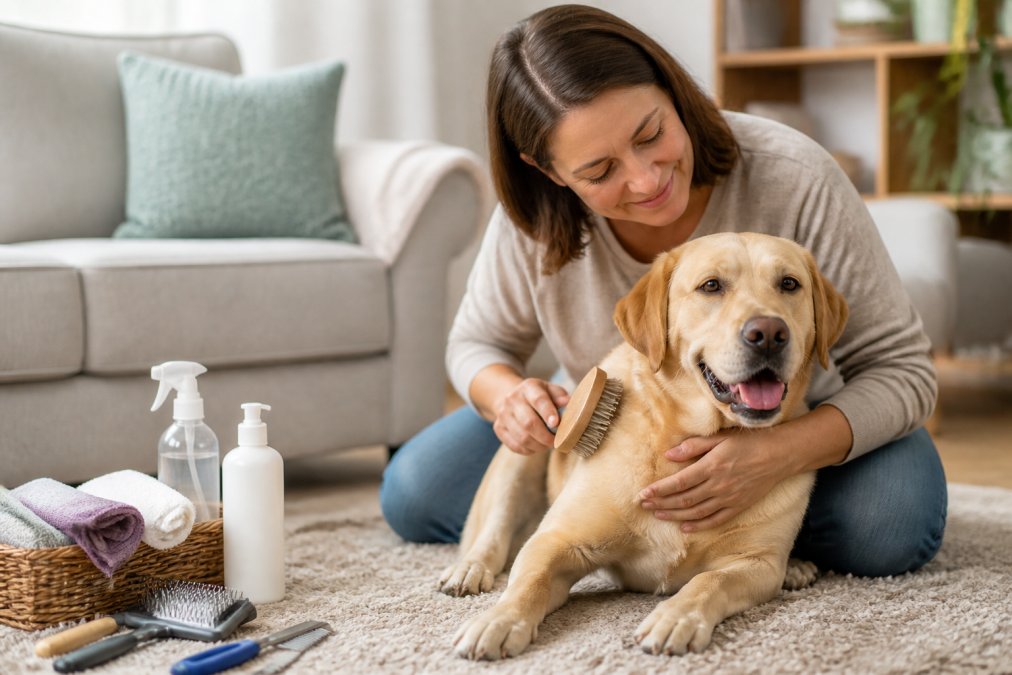
The loud crunch of standard clippers and the jingle of metal tags are two of the biggest culprits. This is where the right equipment does more than any supplement can.
A practical sequence that works:
- Start with a short, calm session using a soft brush, and stop while your pet is still relaxed.
- Introduce quiet tools separately, letting your pet sniff them before they touch fur.
- Use a deshedding tool with micro-contoured bristles so the undercoat comes away without pulling at the skin.
- Swap metal ID tags for a silent, custom-fitted tag to remove the constant jingle that keeps anxious pets on edge.
- Keep sessions brief, reward generously, and build up over several weeks.
Plush Hound was built around exactly this problem. Our silent nail clippers and micro-contoured deshedding gloves are designed to remove the noise and the pulling that make grooming frightening, so a nervous dog can stay calm from start to finish. The silent ID tags finish the job by removing the metallic jingle that many owners never realise is keeping their pet alert.
Pair the right tools with a gentle routine, and most nervous pets improve steadily. If your pet's fear is severe, work alongside your vet, and let the equipment and the technique handle everything else.
Frequently Asked Questions
Are calming supplements safe for all pets?
Not all calming supplements suit every pet. Always check with your vet before starting a new supplement, especially if your pet takes medication or has a health condition. Some ingredients, such as melatonin, aren't suitable for pets with certain medical issues. Start with a low dose and monitor your pet for any changes in behaviour or appetite.
How long do calming supplements take to work for dogs?
It depends on the supplement and your dog. L-theanine often shows effects within 30 to 60 minutes, making it useful before grooming or vet visits. Herbal blends and probiotics may take days or weeks to build up in your pet's system. Keep a simple log of when you give the supplement and how your dog responds so you can track what works.
What should I look for when buying pet anxiety supplements?
Check the label for a named active ingredient and its amount per serving. Look for products made by companies that follow UK pet supplement regulations and list a batch number. Avoid blends that hide ingredients behind a 'proprietary mix'. If your pet has food sensitivities, choose a formula without artificial colours or flavours. Your vet can help you narrow down the safest option.
Do calming supplements really help with grooming anxiety?
They can help take the edge off, but they work best alongside low-stress handling. Pair a supplement with quiet tools, such as silent nail clippers, and keep sessions short. For a dog that panics at the sound of clippers, a supplement alone won't fix the fear. Combine it with gradual desensitisation and a calm environment for the best chance of success.
Grooming a nervous pet is a test of patience, and the wrong tools make it harder for both of you. Plush Hound exists to make that routine calmer: micro-contoured bristles that remove undercoat without irritation, silent nail clippers that remove the crunch your pet dreads, and custom-fitted silent ID tags that end the constant jingle. Get started with Plush Hound and turn grooming into a calm, bonded moment rather than a battle.