

Table of Contents
- Why Nail Trimming Stresses Dogs Out (And Why It Doesn't Have To)
- What You'll Need Before You Trim Dog Nails at Home
- How to Trim Dog Nails Without Stress: A Step-by-Step Approach
- Dog Nail Trimming Desensitisation Training That Actually Works
- How to Stop Dog From Moving During Nail Trim
- Choosing the Best Quiet Nail Clippers for Dogs
- Common Mistakes to Avoid When Trimming Dog Nails
- Conclusion
- Frequently Asked Questions
Last Updated: 16 September 2026
Why Nail Trimming Stresses Dogs Out (And Why It Doesn't Have To)
Most dogs don't hate having their nails trimmed. They hate the sudden sound, the strange pressure, and the feeling of being held still. Understanding that distinction changes everything about how you approach the task.
A dog's hearing is far more sensitive than ours, so the sharp crunch of a standard clipper can feel startling rather than merely loud. Add the unfamiliar sensation of metal against the nail and the instinct to pull a paw away, and you have a recipe for a wrestling match. The good news is that none of this is permanent. With the right tools and a slower pace, learning how to trim dog nails without stress becomes a routine your dog can actually tolerate, and eventually accept.
This guide from Plush Hound walks through the full process: preparing the space, handling paws calmly, trimming in tiny increments, and using desensitisation training to build trust over time. Below, we'll show you exactly how to work with your dog rather than against them.
The Sounds and Sensations That Trigger Anxiety
Two things set most dogs off: noise and restraint. A standard clipper produces a loud, sudden crunch right next to the ear, and many dogs learn to associate that sound with the pinch of a cut. The vibration of an electric grinder can be just as unsettling, particularly for noise-sensitive animals.
Pressure matters too. Holding a paw firmly, even gently, can feel like being trapped. Dogs that have had a nail cut too short once will often remember it and resist every future attempt. Reducing both the volume and the sense of restraint is the foundation of a calm trim.
Signs Your Dog Is Stressed Before You Even Start
Watch for the early signals, because they appear long before a growl. Lip licking, yawning, turning the head away, tucking the tail, and a sudden freeze are all signs your dog is already uncomfortable. Some dogs will lift a paw and hold it stiffly rather than pull away, which is easy to misread as cooperation.
If you see these signs before you've picked up the clippers, stop and reset. Pushing through stress teaches your dog that the warning signs don't work, and the next attempt will be harder.
What You'll Need Before You Trim Dog Nails at Home
Gather everything first so you're not leaving the room mid-session. A calm, prepared setup does more for your dog's nerves than any single tool.
- A sharp pair of clippers or a quiet grinder
- Styptic powder in case you nick the quick
- A non-slip mat or towel so paws don't slide
- High-value treats your dog only gets during grooming
- Good overhead light, or a clipper with a built-in LED
A clipper with an LED light that illuminates the bloodline inside the nail makes it far easier to see where to stop, which reduces the risk of cutting too short. For dogs who panic at the sound of a crunch, a low-noise grinder is often the better first choice.
How to Trim Dog Nails Without Stress: A Step-by-Step Approach
The core method is simple: go slowly, cut little, and stop while your dog is still calm. Each step below builds on the last, so don't rush ahead.
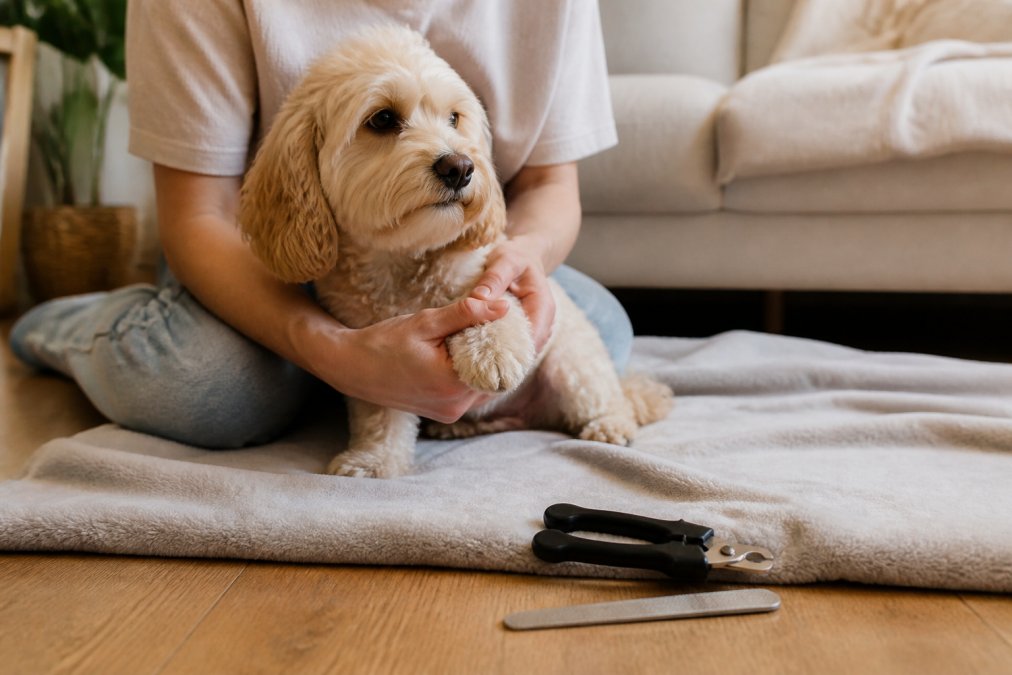
Step 1: Set the Scene for Calm
Choose a time when your dog is already relaxed, not right after a walk or during a burst of energy. Sit on the floor rather than standing over your dog, which removes the sense of being cornered. Keep the room quiet and the lighting bright.
Have treats within reach and let your dog settle next to you before you touch a paw. If your dog won't lie down, work at whatever position they choose.
Step 2: Handle Paws Gently Before Clipping
Pick up one paw, hold it for a second, and release. Treat. Repeat until your dog stops pulling the paw back. This step alone can take several days, and that's fine.
Once your dog is comfortable with a brief hold, press gently on the pad to extend a nail, then release and treat again. You're teaching your dog that a paw hold predicts something good.
Step 3: Trim One Nail, Then Stop
Cut a single nail, treat, and end the session. One nail is a complete session at first. The next day, do two. Build up gradually rather than trying to finish all four paws in one sitting.
Plush Hound LED Nail Trimmers →
Trim small slivers rather than one big cut, and stop short of the pink quick visible inside lighter nails. If your dog has dark nails, take off tiny amounts and check the tip after each pass.
Dog Nail Trimming Desensitisation Training That Actually Works
Desensitisation means pairing the scary parts with something your dog enjoys, in doses small enough that fear never builds. It works because it changes what the clippers predict: instead of a pinch, they predict a treat.
Start with the tool itself. Let your dog see and sniff the clippers, then treat and put them away. Next, touch the clippers to a nail without cutting, treat, and stop. Only then introduce an actual cut.
Keep sessions under two minutes and end on a success. If your dog backs away at any point, you've moved too fast, so drop back a step.
How to Stop Dog From Moving During Nail Trim
The answer isn't a firmer hold. Restraint increases resistance in most dogs, so the better approach is to remove the reasons they want to move.
Choosing the Best Quiet Nail Clippers for Dogs
Quiet tools remove the single biggest trigger, which is why they're worth the investment for anxious dogs. The best quiet nail clippers for dogs are sharp, sized to your dog's nails, and either silent or low-noise.

Here's how the main options compare:
| Tool type | Noise level | Best for | Watch out for |
|---|---|---|---|
| Standard guillotine clippers | Loud crunch | Confident dogs, thick nails | Startles noise-sensitive dogs |
| Scissor-style clippers | Moderate | Small and medium breeds | Can pinch if blades dull |
| LED clippers | Quiet | Seeing the quick clearly | Still produces a cut sound |
| Low-noise grinder | Very quiet | Noise-sensitive dogs | Takes longer per nail |
Common Mistakes to Avoid When Trimming Dog Nails
The biggest mistake is treating a trim as a task to finish rather than a skill to build. Owners who push through a struggling dog usually end up with a dog who fights harder next time.
Other frequent errors:
- Cutting too much at once instead of taking small slivers
- Holding a paw so firmly that the dog feels trapped
- Skipping treats because the session is "quick"
- Trimming right after exercise when your dog is wired
- Only touching paws when it's time to trim
Conclusion
Trimming your dog's nails doesn't have to be a battle, but it does take patience and the right setup. Work in small steps, keep sessions short, and let quiet tools do the heavy lifting so your dog isn't fighting the sound before you've even started. For anxious or noise-sensitive dogs, the equipment genuinely changes the outcome.
Frequently Asked Questions
How can I desensitise my dog to nail clippers?
Start by leaving the clippers on the floor near your dog's bed for a few days so they become a familiar object. Then touch the clippers to a paw without clipping, reward with a treat, and put them away. Repeat this daily for a week before attempting a single nail. Pair every step with something your dog loves, such as cheese or chicken, and keep sessions under two minutes. This dog nail trimming desensitisation training builds a positive association before the tool ever does its job.
Are quiet nail clippers better for anxious dogs?
Yes. Many dogs react to the crunch sound a standard clipper makes as much as to the sensation itself. Quiet nail clippers reduce that sudden noise, which removes one of the main triggers. For dogs who are still uneasy, a low-noise grinder under 45dB can work well because it avoids the crunch entirely. The best quiet nail clippers for dogs are the ones your dog will tolerate without pulling away.
How do I know if I've cut my dog's nail too short?
If you see a dark dot in the centre of the cut surface, you are close to the quick. A small bead of blood means you have nicked it. Press a clean cloth or styptic powder against the nail for a few seconds and keep your dog calm. Clippers with a built-in LED light illuminate the bloodline before you cut, which makes it much easier to stop at the right point. Trim small slivers rather than large chunks to reduce the risk.
How often should I trim my dog's nails?
Most dogs need a trim every three to four weeks, though it depends on how much they walk on hard surfaces. If you can hear nails clicking on the kitchen floor, they are due. For anxious dogs, shorter, more frequent sessions work better than one long one. Try trimming just one or two nails every few days, always ending on a calm note with a reward, so the routine never becomes a battle.