

Table of Contents
- Why Puppies Won't Stay Still During Grooming
- How to Desensitise a Puppy to Grooming
- Best Quiet Grooming Tools for Dogs
- Step-by-Step Grooming for a Restless Puppy
- How to Groom Anxious Dogs Without Stress
- Common Mistakes to Avoid When Grooming a Restless Puppy
- Frequently Asked Questions
Last Updated: September 30, 2026
Why Puppies Won't Stay Still During Grooming
Understanding how to groom a puppy that won't stay still? Puppies fidget during grooming for straightforward reasons. They're not being difficult, they're being puppies. Young dogs have short attention spans and high energy levels. New sensations feel strange and sometimes scary. A grooming session combines unfamiliar touches, sounds, and restraint. That's overwhelming for a small animal.
Noise is a major culprit. Traditional metal nail clippers make sharp sounds that startle puppies. Loud dryers and buzzing tools trigger fear responses. A puppy that jumps at sudden noises will absolutely panic during grooming.
Movement also matters. Puppies haven't learned to hold still for long. They want to play, explore, and chase things. Asking them to stay in one spot for 20 minutes goes against their natural instincts. The more you fight their energy, the more they resist.
Pain or discomfort makes everything worse. Cheap grooming tools pull hair instead of cutting it cleanly. Rough handling irritates sensitive skin. A puppy that's uncomfortable will thrash and struggle every time you touch them.
The good news: restlessness during grooming is fixable. It takes patience, the right tools, and a solid plan.
How to Desensitise a Puppy to Grooming
Desensitisation means slowly introducing your puppy to grooming in small, positive steps. Start before you actually groom them.
Spend time just touching their paws, ears, and face when there's no grooming happening. Make it a game. Reward them with treats and praise. Let them get used to your hands near sensitive areas.
Introduce grooming tools without using them. Let your puppy sniff the brush, the gloves, the clippers. Leave them on the floor so your puppy can investigate. This removes the mystery and fear.
Play quiet grooming sounds in the background during playtime. If you're using silent tools, that's even better. The goal is to make grooming sounds feel normal and non-threatening.
Start with very short sessions. Groom for just two minutes, then stop. End on a positive note, always. Your puppy should think grooming is quick and rewarding, not a marathon of discomfort.
Consistency matters more than intensity. Five minutes of calm grooming every other day works better than one long, stressful session per week.
Best Quiet Grooming Tools for Dogs
Noise stress is real. Many pet owners find that anxious puppies calm down immediately when grooming tools are silent.
Deshedding gloves are game-changers for restless puppies. They feel like a massage, not a grooming session. Your puppy experiences gentle hand contact rather than a foreign tool. The Plush Hound Spray Gloves combine soft bristles with a quiet spray function, making them ideal for puppies that associate traditional tools with stress.

Soft silicone brushes are gentler than metal ones. They remove loose fur without pulling. A soft silicone brush feels soothing to most puppies and produces no sharp sounds.
Silent nail clippers eliminate the crunch sound that terrifies anxious dogs. Many pet owners report their puppies stay completely calm with quiet clippers, whereas they panic with traditional ones.
Bathing gloves serve double duty. They clean and deshed simultaneously. Your puppy gets a massage-like experience rather than harsh scrubbing.
The material matters. Look for soft fabrics like mesh and TPR (thermoplastic rubber). Avoid anything metal or plastic that creates noise.
| Tool Type | Best For | Key Benefit |
|---|---|---|
| Deshedding gloves | Anxious puppies | Feels like touch, not grooming |
| Silicone brushes | Sensitive skin | Gentle and quiet |
| Silent clippers | Noise-sensitive dogs | No scary sounds |
| Bathing gloves | Double duty | Massage + cleaning |
Step-by-Step Grooming for a Restless Puppy
Step 1: Prepare Your Space and Gather Supplies
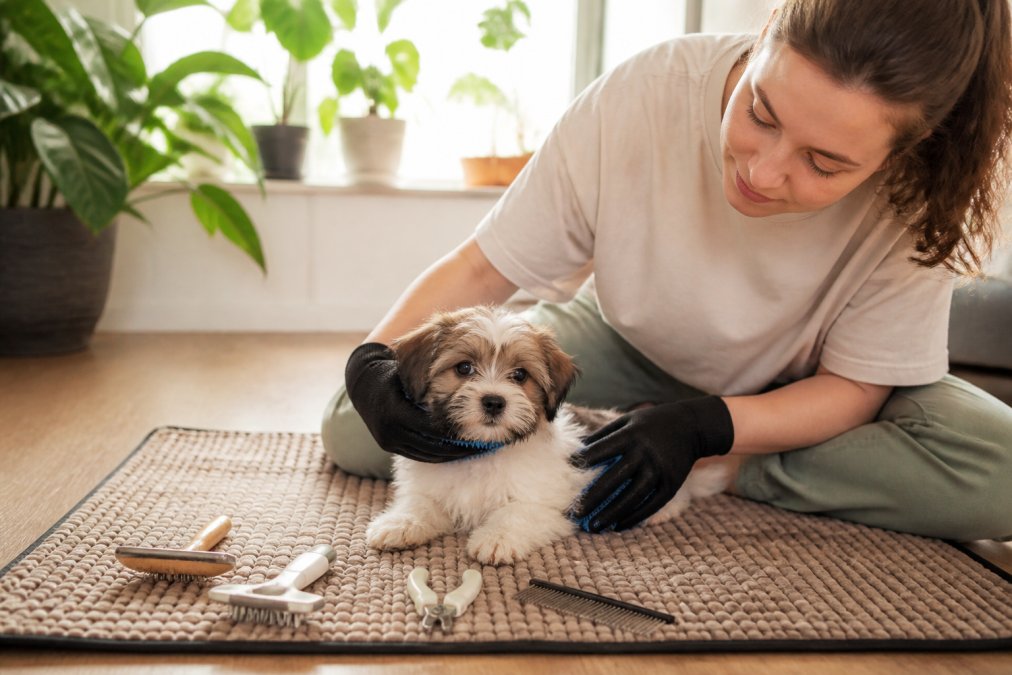
Create a calm grooming area before you start. Choose a quiet room away from distractions. Use a comfortable mat or towel so your puppy feels secure.
Gather everything you need within arm's reach. You don't want to leave your puppy mid-groom to find supplies. Have treats ready. Use high-value rewards, things your puppy loves.
Set up good lighting. You need to see what you're doing, and bright light helps you work faster. A faster session means less stress for your puppy.
Make sure your puppy has had exercise. A tired puppy is a calm puppy. A 15-minute play session before grooming helps burn excess energy.
Step 2: Start with Short, Positive Sessions
Begin with just five to ten minutes, the foundation of how to groom a puppy that won't stay still? This isn't about completing a full groom in one session. It's about building positive associations.
Touch your puppy's paws. Brush a small section of their coat. Trim one or two nails if they're calm. Then stop while they're still happy.
Praise heavily throughout. Use a calm, encouraging voice. Treats should come frequently, after each small task, not just at the end.
End every session on a success. If your puppy becomes stressed, stop immediately. Never push through resistance. A negative experience sets back your progress by weeks.
Step 3: Groom in Short Sections
Don't try to groom your entire puppy in one go. Work on one area at a time across multiple sessions.
Session one: brush the head and neck. Session two: the back and sides. Session three: the legs and paws. Spread grooming over several days.
This approach keeps sessions short and manageable. Your puppy stays calm because they know it won't last long.
Within a week or two, your puppy becomes accustomed to the routine. They start to anticipate the treats and praise instead of fearing the session.
Step 4: Use Treats and Praise Strategically
Treats are your most powerful tool. Use them constantly during grooming.
Give a treat before you start. Give treats between each small section. Celebrate every moment of calm behaviour.
High-value treats work best. Use something your puppy only gets during grooming, chicken, cheese, or special training treats.
Praise verbally as well. A happy, encouraging voice tells your puppy they're doing the right thing. Combine verbal praise with treats for maximum impact.
Never use treats as punishment or withhold them as punishment. Grooming should always feel rewarding.
How to Groom Anxious Dogs Without Stress
Anxiety during grooming is different from simple restlessness. An anxious puppy shows signs of real fear: trembling, excessive panting, whining, or attempts to escape.
The first step is acknowledging the anxiety. Don't push through it. A traumatised puppy becomes a dog that fights grooming for years.
Use the quietest tools available. Noise amplifies anxiety. The Plush Hound Hair Remover Mitt creates zero sound, making it ideal for noise-sensitive puppies.
Work in a safe space where your puppy feels secure. Some puppies groom better on a familiar bed rather than a grooming table. Others prefer the bathroom because the confined space feels safer.
Consider grooming when your puppy is naturally calm. Early morning or after exercise works well for many puppies. Avoid grooming when they're already stressed or overstimulated.
Take breaks between sections. Let your puppy move around, play, and reset. A five-minute break between grooming tasks helps anxious puppies stay calm for longer.
Some puppies benefit from a second person. One person grooms while the other provides treats and reassurance. This divides your puppy's attention and reduces focus on the grooming itself.
Common Mistakes to Avoid When Grooming a Restless Puppy
Starting too fast. Many owners jump straight into full grooming sessions. Your puppy needs weeks of short, positive exposure first. Patience now saves frustration later.
Using loud tools. Traditional metal clippers and dryers create noise that terrifies puppies. Quiet tools cost slightly more but deliver dramatically better results with anxious dogs.
Forcing compliance. Holding your puppy down or restraining them tightly backfires. They learn to fear grooming and resist harder next time. Gentle handling always wins.
Skipping desensitisation. Some owners never introduce tools or touch beforehand. Your puppy experiences everything as a shock. Spend two weeks just letting them get comfortable with grooming before you actually groom.
Inconsistent rewards. Treats and praise must come constantly during early sessions.
Frequently Asked Questions
How do I get my puppy to stop moving while I groom him?
Start with very short sessions (5-10 minutes) so your puppy doesn't become overwhelmed. Use a non-slip mat to help him feel secure, and reward calm behaviour with treats and praise immediately. Never restrain him forcefully; instead, gently guide him and pause if he becomes anxious. Breaking grooming into smaller sections over multiple days is far more effective than forcing a long session. Most puppies settle naturally once they realise grooming isn't painful or frightening.
What quiet grooming tools work best for anxious puppies?
Quiet tools make an enormous difference for noise-sensitive puppies. Deshedding gloves like the Plush Hound Hair Remover Mitt (£15.40) allow you to groom without loud brushing sounds, whilst soft silicone combs offer gentle cleaning. Avoid traditional metal clippers that make sharp crunch sounds; these startle anxious dogs. Gloves and combs let your puppy focus on the pleasant sensation of being groomed rather than bracing for noise.
How long should a puppy grooming session last?
Keep initial sessions to 5-10 minutes, especially for restless or anxious puppies. Short, positive experiences build confidence far better than lengthy sessions that leave your puppy stressed. As your puppy becomes accustomed to grooming, you can gradually extend sessions to 15-20 minutes. The goal is consistency and calm, not speed. Multiple short sessions throughout the week are far more effective than one long session that overwhelms your puppy.
Should I use treats to keep my puppy still during grooming?
Yes, treats are valuable, and timing matters. Use high-value treats your puppy loves, and pair them with calm praise. This teaches your puppy that grooming leads to something positive. Avoid using treats as a bribe to force your puppy to stay still; instead, use them to reinforce calm behaviour and build positive associations with the grooming experience itself.